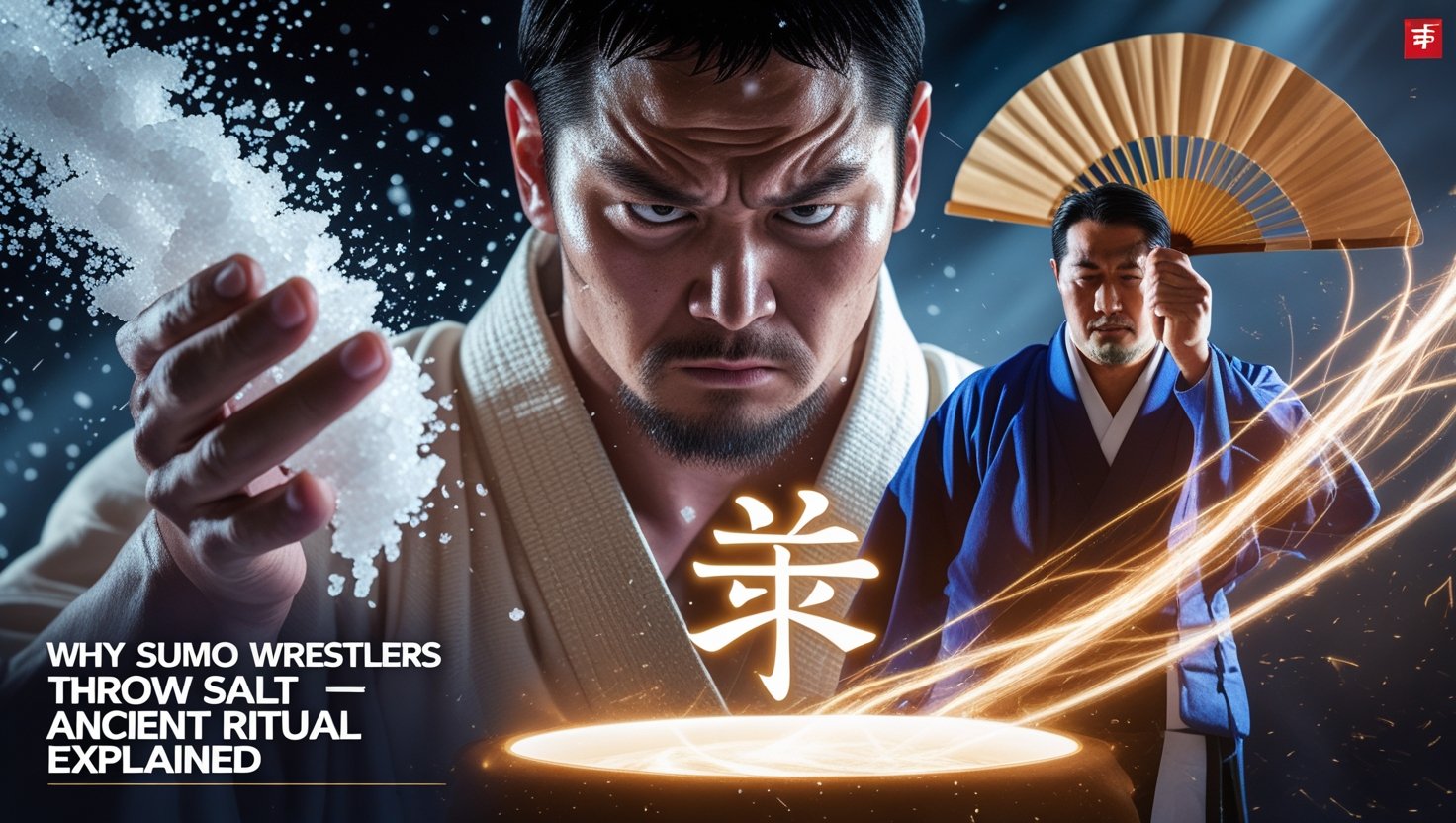
Imagine a sumo wrestler tossing a handful of salt into the ring, a simple act loaded with centuries of meaning. This ritual fuses ancient Shinto purification with practical benefits, creating a spectacle where each grain represents both spiritual cleansing and competitive readiness.
Spiritual Roots: The Shinto Connection:
The origin of salt throwing in sumo traces back to the early days of Shintoism. In Shinto rituals, salt is revered as a powerful purifier that wards off evil and cleanses impurities. Long before modern sumo developed into a competitive sport, early practitioners believed that sprinkling salt could neutralize negative energies and invoke divine blessings.
This spiritual connection was preserved as sumo evolved, making the salt ritual more than just tradition; it became a sacred rite that connects the athletes with a higher purpose. The practice underscores a deep respect for the divine forces believed to govern nature, turning every match into an offering of purity and honor.
Salt as a Sacred Purifier and Practical Ally:
While the primary essence of this ritual is spiritual, there are tangible, practical benefits as well. Salt throwing acts as a disinfectant and drying agent, preparing the dohyo (sumo ring) for the intense physicality of the match. As wrestlers’ hands become sweaty during their energetic bouts, salt is believed to help maintain a cleaner surface, reducing bacteria and enhancing grip.
The drying effect of salt not only contributes to hygiene but also symbolizes the removal of distractions. In this way, every sprinkle of salt becomes a gesture of focus, simultaneously cleansing the space and the spirit, ensuring that only the essence of the contest remains.
Ancient Rituals in a Modern Arena:
Sumo, steeped in history and tradition, remains one of Japan’s oldest sports. The practice of salt throwing has endured through the centuries, transmuting from a Shinto ritual into a customary pre-match gesture that all sumo wrestlers perform. During matches, the ritual is performed with precise ceremony, wrestlers or ring attendants meticulously scoop salt and toss it over the ring with deliberate movements.
This behavior instills a sense of continuity with the past, reminding everyone present that while the sport has modernized, its roots remain firmly embedded in traditions that honor the gods and the spirit of competition.
Symbolism Beyond the Ring:
The act of throwing salt carries rich layers of symbolism. Each grain is seen as a microcosm of purification, a force that sweeps away bad luck, misfortune, and the lingering energies of previous contests. For many fans and practitioners alike, observing the salt ritual is a moment of reflection, a silent acknowledgment of the struggle between chaos and order.
It is as if the sumo wrestlers are calling upon an unseen force to embolden their spirit and secure victory by ensuring that only positive, uncontaminated energy fills the sacred ring. Through this lens, salt becomes a dynamic symbol of resilience and renewal that transcends the physical realm and touches the core of Japanese cultural identity.
The Technique: Precision in Every Sprinkle:
The ritual’s execution is as important as its meaning. Prior to a bout, wrestlers typically scatter salt in a methodical, almost ritualistic manner. The technique is refined over generations, with every move reflecting the precision and respect demanded by the sport. This careful performance is not merely for show; it represents a deliberate invocation of sacred energy and an affirmation of one’s commitment to fair play.
The act of sprinkling is remarkably intentional, merging the physical with the spiritual, a dance of order amidst the impending chaos of combat. Each measured step of the process reinforces that the match is begun with purity, focus, and the blessings of ancient tradition.
Legacy and the Community Spirit:
Beyond individual matches, the salt-throwing tradition reinforces the communal spirit that is at the heart of sumo wrestling. This ancient practice is a shared cultural treasure that connects modern sumo wrestlers not only with their peers on the ring but also with generations of athletes before them. The ritual serves as a reminder of mutual respect, unity, and shared cultural values.
Whether in grand tournaments or local events, the foundational act of clearing the ring with salt is a visible thread tying the community together. It embodies respect for tradition, the continuity of cultural heritage, and the dedication to a sport that is as much about discipline and honor as it is about physical might.
The Enduring Power of Ritual in Modern Sports:
In our fast-evolving world, where technology and performance metrics dominate many sports, the salt-throwing ritual stands out as a beacon of cultural continuity. Its steadfast presence in sumo matches underscores a vital connection to the past, a commitment to grounding modern athleticism in timeless values. This blend of ritual and competition offers a unique counterbalance to more contemporary practices.
For the audience, it is a window into the deep cultural narrative of Japan, a tangible connection to the sacred elements that have historically governed human pursuits of excellence and honor. Ultimately, this liminal space between ritual and sport is where tradition meets modernity, allowing ancient wisdom to guide tomorrow’s champions.
Conclusion:
Sumo wrestlers throw salt as both a blessing and a shield, providing purification, focus, and a nod to ancient rituals. In the delicate flurry of each sprinkle, centuries of tradition and culture are passed on with every match.
FAQs:
Q1: Why do sumo wrestlers throw salt?
To purify the ring and ward off evil.
Q2: What is the ritual’s origin?
It comes from ancient Shinto purification practices.
Q3: Does salt serve a practical purpose?
Yes, it dries sweat and disinfects the ring.
Q4: How is the salt thrown?
With precise, ceremonial movements.
Q5: What does the ritual symbolize?
Renewal, focus, and respect for tradition.
Q6: Why is this tradition important in modern sumo?
It connects current wrestlers with their cultural heritage.